
As a Pipeline Weight Bags Manufacturer in India, we provide a range of high-quality pipeline weight bags at competitive prices
Oil & Gas, Civil Engineering & Subsea Logistics Application High Quality Pipeline Weight Bags
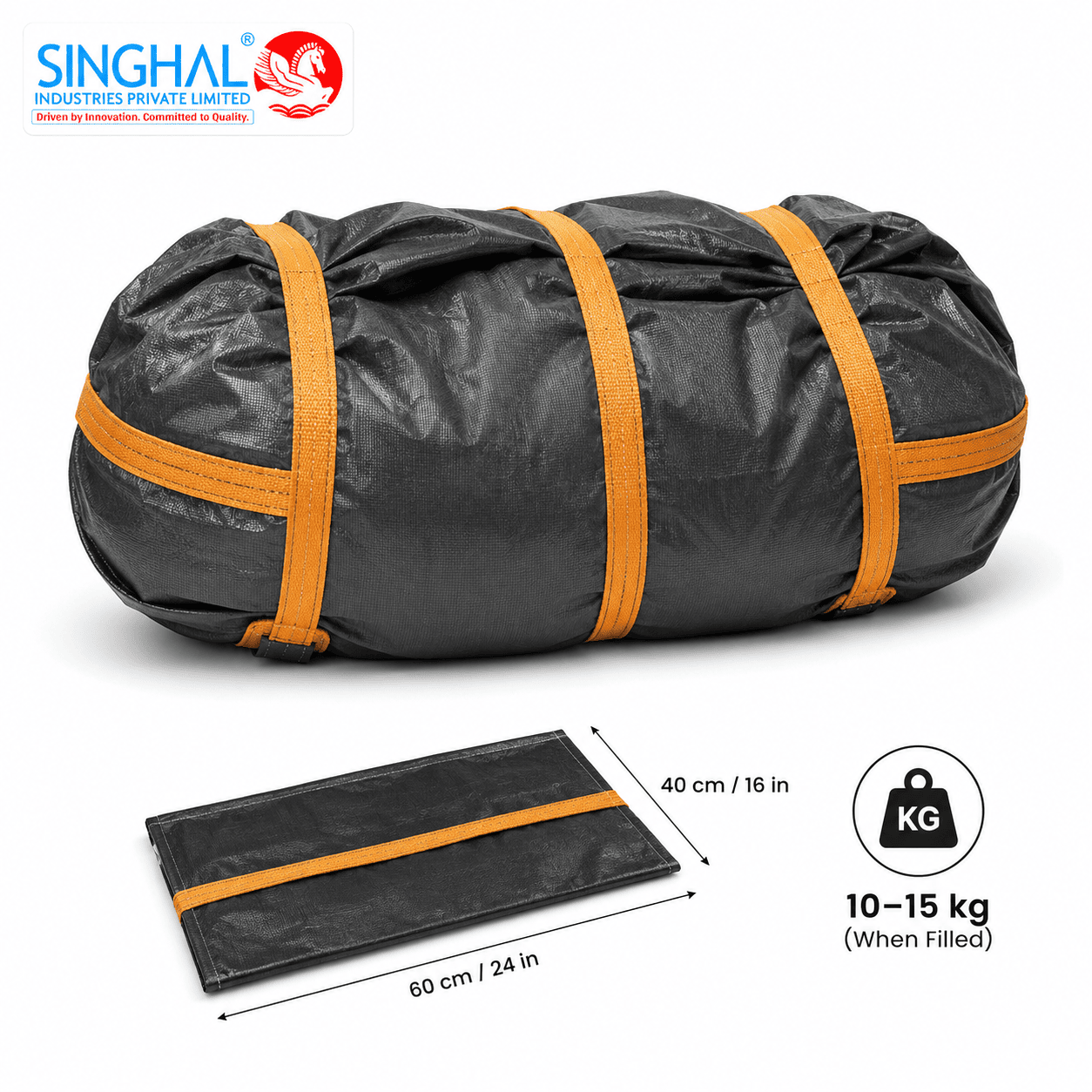
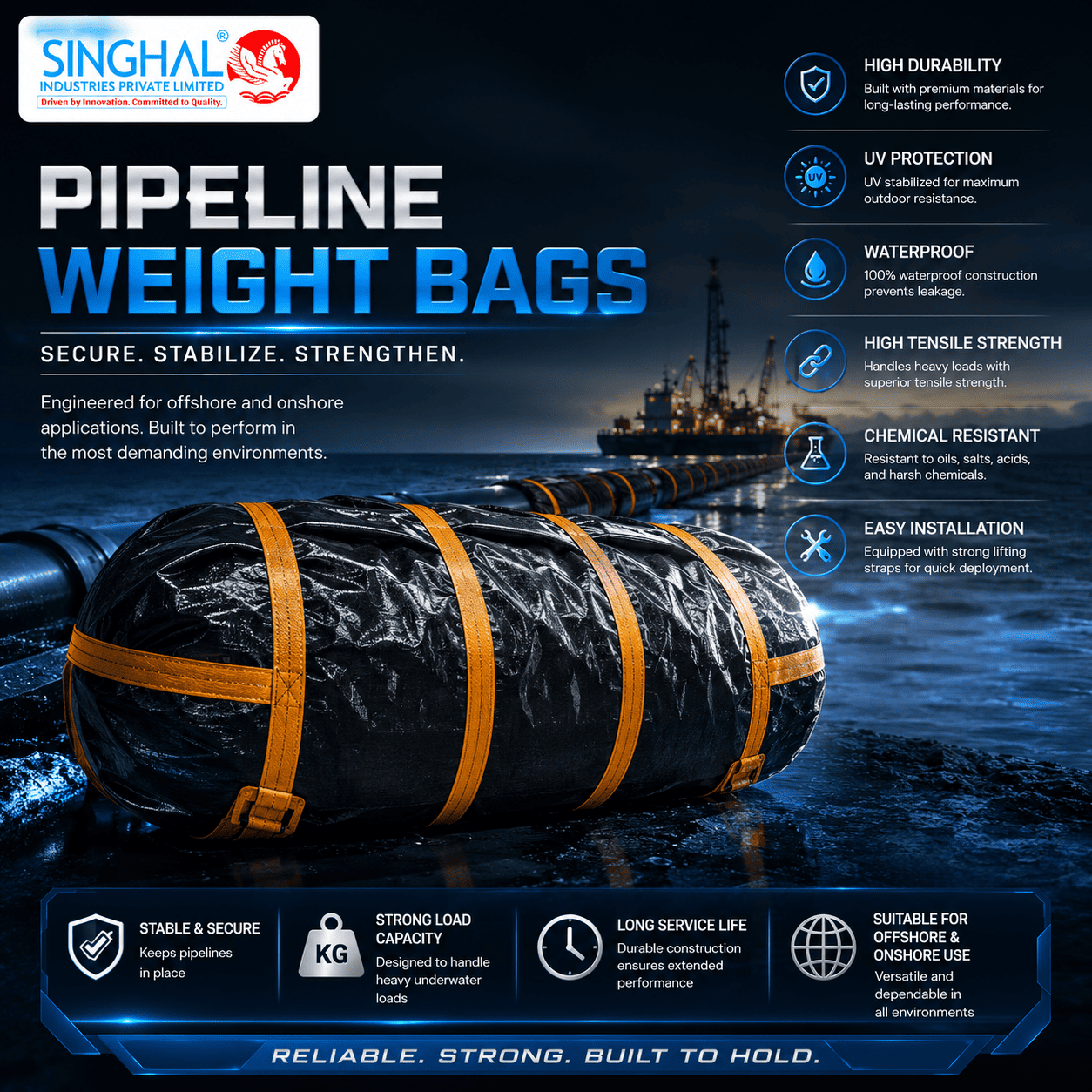
Singhal Industries Private Limited is one of the premier Pipeline weight bags manufacturer, supplier and exporters of pipeline weight bags also called pipeline saddle bags in India. Precision-engineered buoyancy control systems that excel in global energy networks, offshore infrastructure, civil engineering and subsea logistics applications.
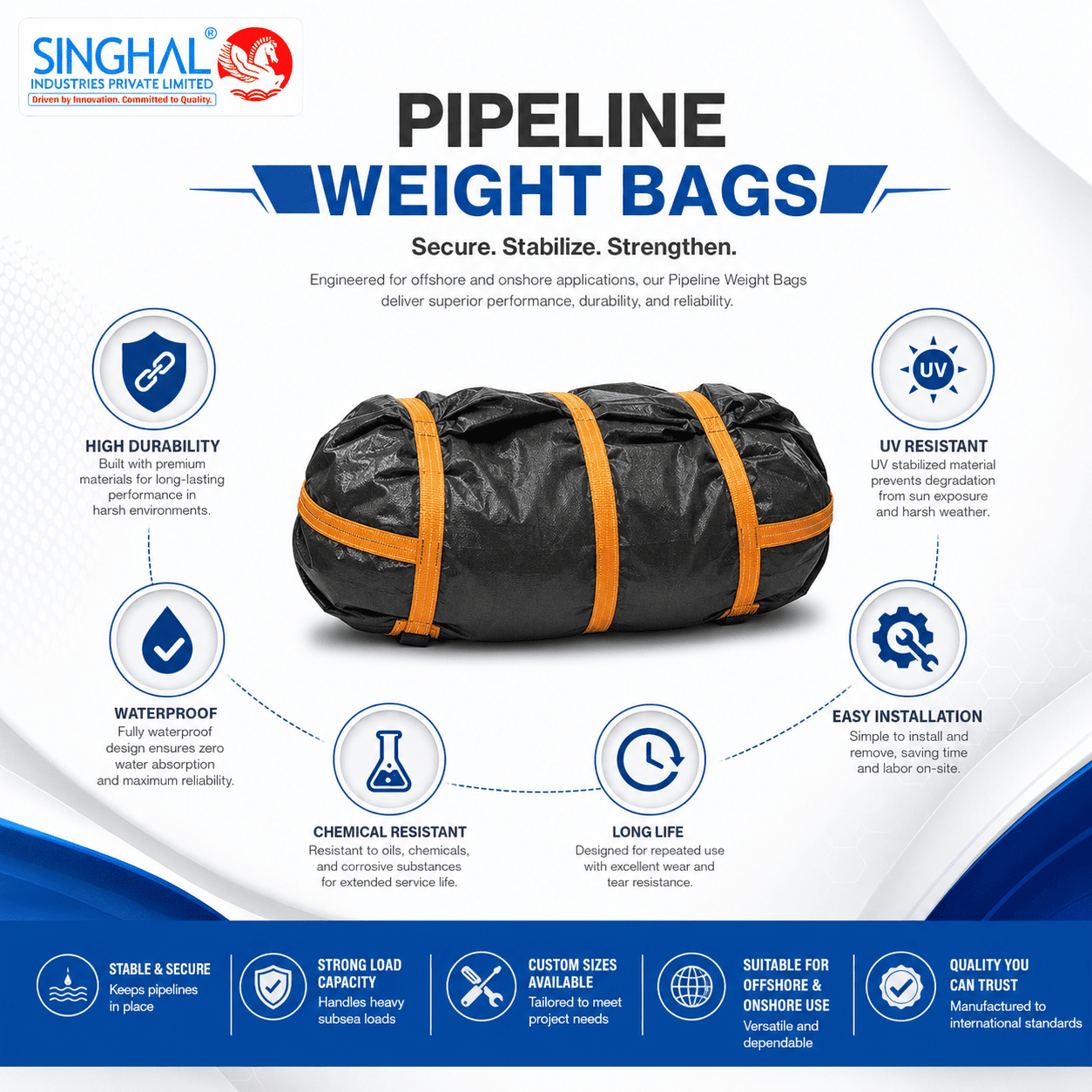
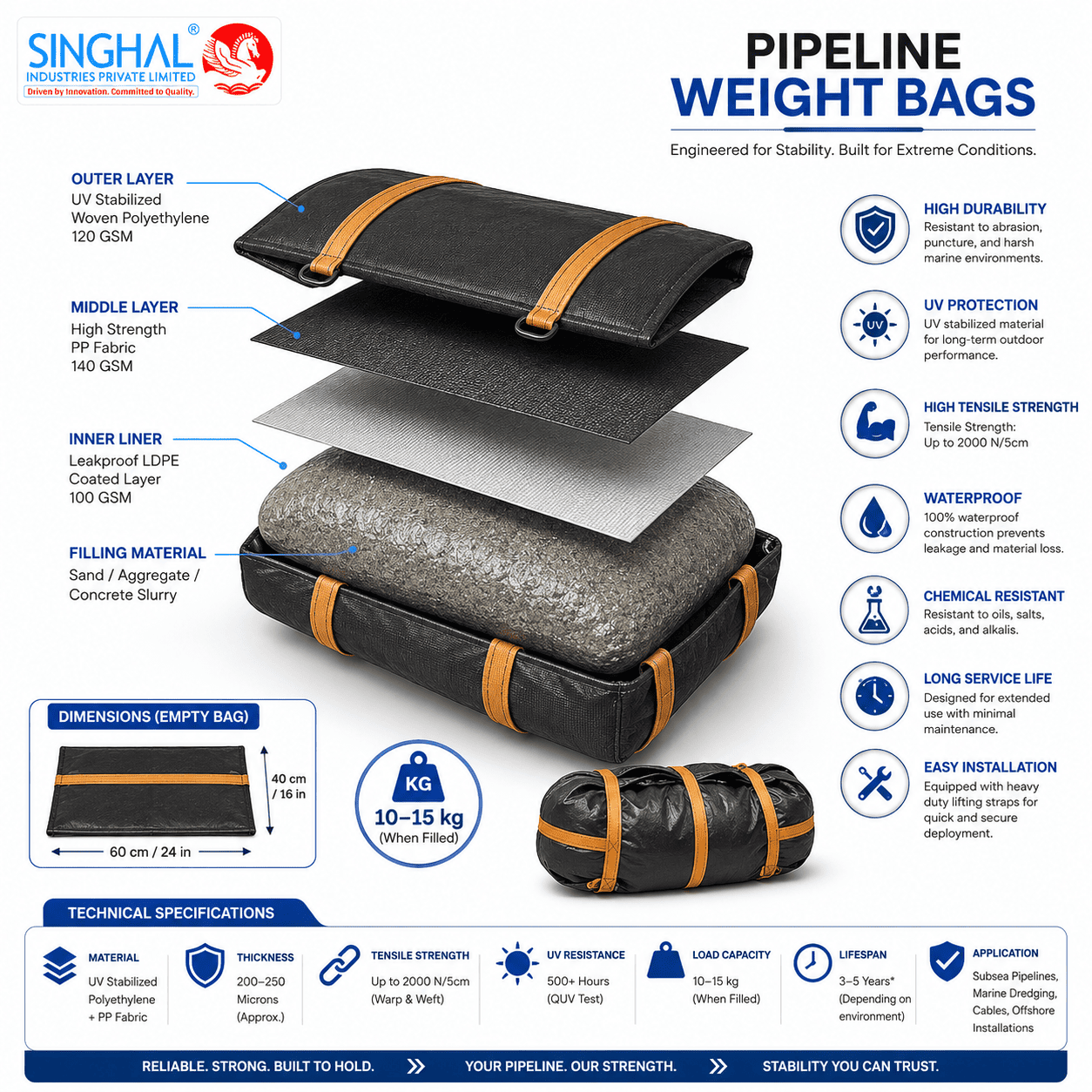
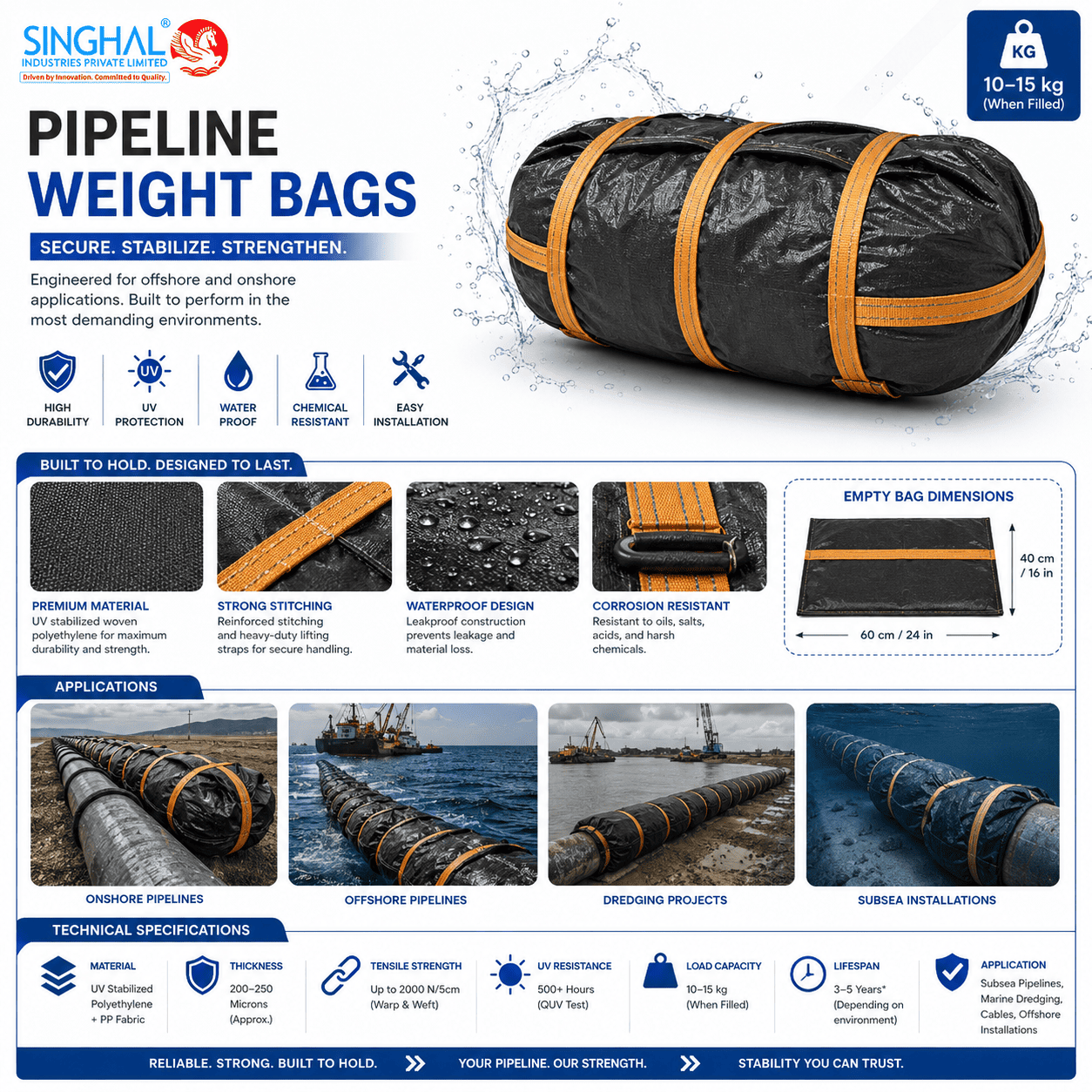
Our industrial-strength saddle bags are producing using high-tenacity, UV-stabilised geotextile woven fabrics, which provide exceptional puncture resistance, high tensile strength, supreme chemical resistance and long term subsea durability. Their technical ballast bags offer a solution that addresses the need for negative buoyancy, pipe coating protection and reduced logistics overheads, a solution that is ideal for traditional, rigid concrete ballast.
Pipeline Weight Bags are multi-compartment geotechnical containment systems specifically designed to deliver negative buoyancy, mechanical shielding and constant anchoring of underwater or underground utilities. Oil, gas, water, or chemical pipelines that traverse swamps, floodplains, river crossings, and the marine environment are vulnerable to natural buoyancy forces which may cause them to lift, bend, and/or rupture.
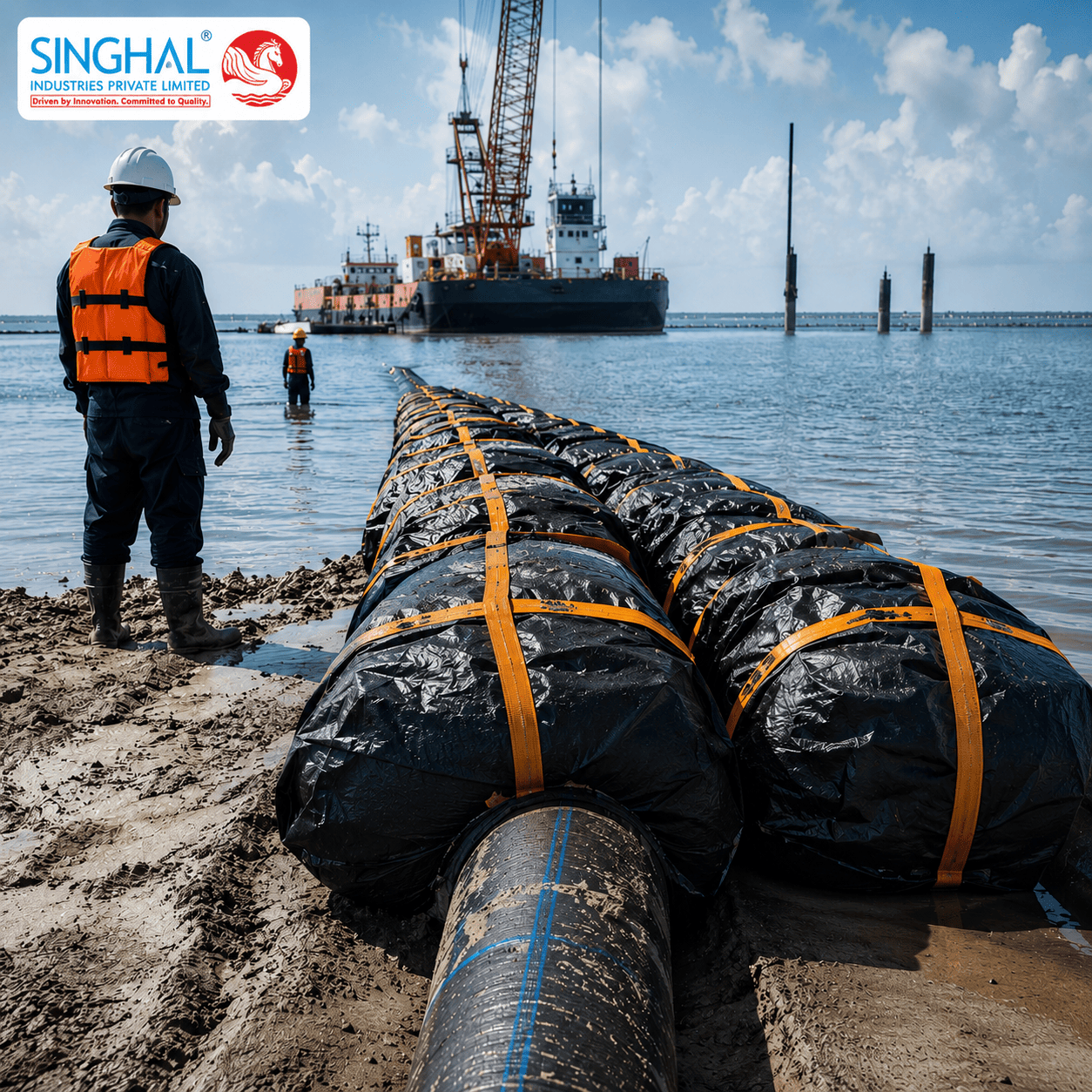
These are special bags which are laid directly across the top of the pipe, supported by two ballast containers on either side to offset these hydrostatic uplift currents. These geotextile matrices are filled with local gravel or aggregate or crushed stone ballast on-site, so there is no risk of steel pipelines shifting or floating.
Virgin Geotextile Weight Bags
Made from 100% pure polyolefin resins, which ensure maximum burst strength, superior fiber quality, and long-term stability of critical infrastructure contracts.
Heavy-Duty Offshore Saddle Bags
Fabric containers reinforced with multi-walls designed specifically to resist the impact of waves as well as deep sea pressures and the intense salt-water currents on offshore platforms for drilling.
UV-Stabilized Cross-Country Bags
It is a combination of advanced chemical light inhibitors that block solar radiation, keeping mesh bags from becoming fragile during long periods of in the open air desert for pipeline storage.
Segmented Multi-Pocket Weight Sacks
With separate compartments inside to stop heavy ballast material from slipping or pooling on one side of the structure when laid on deep river ditches or banks.
Cost-Effective Civil Reprocessed Bags
It is made from a high-quality recycled polymer matrix, it is designed for temporary municipal drainage projects and temporary flood diversions and for basic ballast containment.
Singhal Industries Private Limited satisfies certain global B2B procurement restrictions by allowing for dimensional cuts that are flexible and bespoke safe load thresholds:
Our advanced ISO-certified manufacturing facilities utilize precise industrial technology to implement excellent quality control metrics across all technical fabric productions.
Singhal Industries Private Limited is a world class company in the field of high durability polyolefin intermediate engineering and bulk industrial packaging development. Our strategic factory assets are:
Next, Verified International Logistics (VIL) will export premium geotechnical assets to more than 80 countries. Next, and concurrently, Verified International Logistics (VIL) will export premium geotechnical assets to over 80 countries.
Weight bags are specialized geotechnical containment products used to cover pipes to impart negative buoyancy so as to secure pipelines on swamps, flooded regions or underwater.
As opposed to using expensive-to-transport concrete weights which may scratch the surface of the pipe, saddle bags are shipped flat to site, use local gravel as ballast, and are fitted with a soft geotextile backing that prevents scratches on coating.
Yes, our weight bags are made of inert polyolefin geotextile resins and thus do not deteriorate when exposed to sea water, soil acids, or any marine salts.
Yes, indeed. We offer flexographic printing services at our manufacturing facilities so as to enable engineering companies to brand their designs, install and safe capacity indicators.
The aggregates that we use in our bags are local gravels, rounded river stones, washed aggregates, or crushed rocks. Porous fabric ensures instant drainage of water and strong retention of aggregate pieces.
PP geotextile bags provide great rigidity of material and high tensile strength required for normal underwater trenching applications. HDPE bags have better shock absorption capabilities at low temperatures.
Yes, it is possible to make adjustments to center gussets, suspended pocket depths and weight according to diameters of pipelines that vary from 6 inches to 60 inches and above.
No, unlike ordinary plastics, our technical fabrics remain strong and flexible to absorb shock during storage in warehouse conditions for an extended period of time.
Our pipeline saddle bags have safety factors that are 5:1 and 6:1 which means that the loops attached to the bags will be able to resist heavy stress under crane lifting operations.
The multi-segmented compartmentalized structure of our weight bags prevents internal stone fill from shifting to either side, enabling a vertical positioning stability on the steep river banks or hillside terrain.
No, the purest form of polyolefin will ensure excellent material flexibility and shock resistance down to subzero temperature levels.
Yes, the base resin used in the production of the polyolefin is 100% recyclable polymer material.
All the costs are determined by your specifications for the size of the bags, GSM, capacity, print, and total quantity ordered.
The geotextile weave used is very soft and prevents scratches from forming on the pipeline which would affect the cathodic protection system in place.
Procurement personnel can contact our export trading desk and provide us with their schematic designs, weight capacities, and pipe dimensions.
A 100% eco-safe framework Eco-friendly polymer composition doesn't let synthetic chemicals that are toxic to the environment into marine ecosystems that are clean and healthy.
| Chemical Type / Subsea Risk Factor | Material Safety Resistance Level |
| High-Salinity Sea Water | Very good (Zero loss of material or fibers) |
| Acidic/Alkaline Soil Mineral Salts | Fantastic (Inert polyolefin base that prevents the breakdown of calcification) |
| Hydrocarbon Leaches & Processing Oils | Good (Maintains full tensile strength when the oil contacts occur) |
| Bacterial Microorganisms & Fungi | Fantastic (Inert synthetic canvas blocks marine-life nesting) |
| Continuous Hydrostatic Uplift Currents | Excellent (High-weight stability that prevents the movement of utility vehicles) |
| Property | Pipeline Weight Bag | PP/HDPE Woven Anti Slip Bag |
| Primary Purpose | Anchoring of buoyancy and subsea negative weight load | Stability of pallet stacking with high-friction and packaging |
| Capacity Range | Capacity for heavy weight (1 Tonne in 10 Metric Tonnes) | Standard loads of packaging (Typically 25 to 50 kg) kilograms) |
| Base Weight | Geotextiles with high-density (200 or 600 to more GSM) | Standard weights for packaging (50 GSM up to 120) |
| Lifting Setup | Multi-ton-rated webbed that is integrated with heavy-duty Sling loops | Handles with a standard open mouth or flat-top designs |
| B2B Target | Oil & Gas companies, offshore EPC teams Subsea services, offshore EPC teams | Chemical plants, cement factories and fertilizer blenders |
| Property | Pipeline Weight Bag | Standard PP Woven Bag |
| Fabric Openness | Micro-porous mesh for draining water, while retaining gravel | Interlock weave that is densely closed for dry goods |
| Puncture Threshold | Extremely and able to handle jagged stone drops and is able to hold it without tears | Moderate; susceptible to tears in the event of a sharp gravel filling |
| Shield Protection | Outstanding; offers soft geotextile to protect pipe wraps | Thin fabric that is low in weight offers only a small amount of protection against impacts that are heavy. |
| Asset Lifespan | Decades of subsea or underground operating stability | Short-term shipping use; prone to wear after deliveries |
Offshore Marine Oil & Gas Infrastructure
Widely used to provide crucial negative buoyancy as well as structural anchoring underwater for trunk pipelines in rough ocean bed, preventing lines from being moved by subsea flow currents.
River and Stream Crossings
Widely deployed along river bed as well as underwater utility crossings where the speed of flow currents, seasonal flash floods and subsea shifts are threatening to expose underground pipes.
Floodplains and Saturated Swamps
The primary anchoring solution in high-water-table zones as well as coastal wetlands and lowlands with marshy soil that behaves as liquid, causing pipelines to move.
Mechanical Coating Shielding
The material is applied to abrasive, rough trenches to create an extremely durable geotextile cushion for separation, protecting the pipe coatings of vulnerable exterior pipes from scuffs and scratches when backfilling.
Civil Flood Protection Ballast Barriers
The material is sourced by municipal engineering departments to construct massive geotextile blockades. to anchor industrial retaining walls and to strengthen water diversions.
| Property | Specifications |
| Material Base | High-Tenacity Polypropylene (PP) / High-Density Polyethylene (HDPE) Woven Geotextile |
| Fabric Weight (GSM) | Heavy Duty (200 GSM to 600+ GSM, based on the safe load requirements) |
| Safe Working Load (SWL) | 1 Tonne up to 10 Metric Tonnes per Bag Assembly |
| Safety Factor (SF) | Standard 5:1 or 6:1 Industrial Rating |
| Tensile Strength | More than or equivalent up to (High capacity axial and radial capacity) |
| Water Permeability | Micro-Porous Controlled Mesh (Drains fluids, while holding fine gravel) |
| UV Resistance Limit | More that or equivalent to 70 percent strength retention following 500 hours of intensive sun exposure |
| Operational Temperature | Extreme durability can range from to minus 30 degrees Celsius to over 80 degrees Celsius |
| Seaming Technology | Double-Needle Sift-Proof Overlock Stitching |
| Color Specifications | Jet Black, High-Visibility Orange, Natural Tan, and Custom Safety Tints |
| Site Condition | Suitability Level |
| Wet Soil | Excellent |
| Dry Soil | Good |
| River Crossing | Excellent |
| Swamp Area | Excellent |
| Foreshore Zone | Good |
| Trench Installation | Excellent |
| Coated Pipeline Installation | Excellent |


