
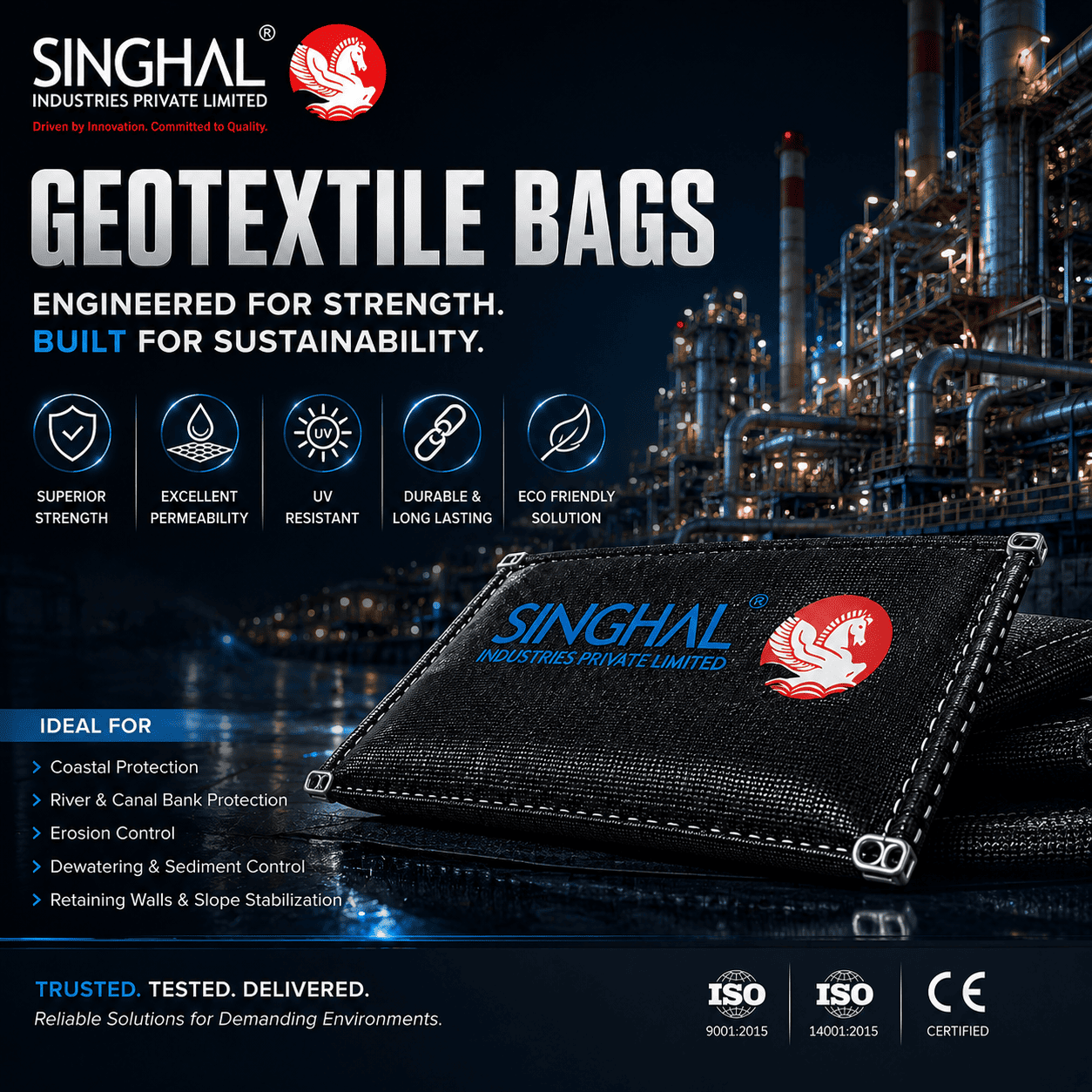
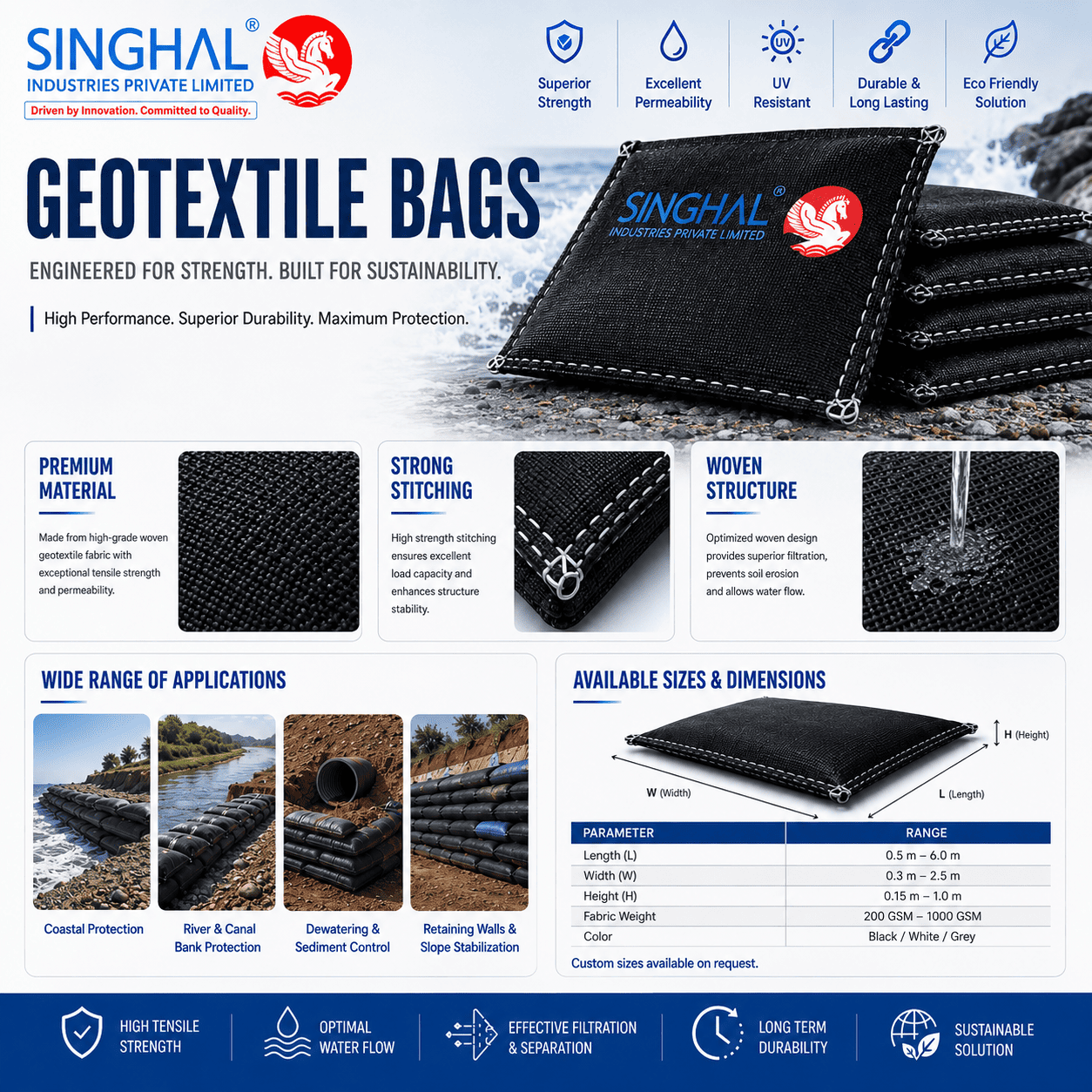
We are a Geotextile Bags Manufacturer in India and also Geo Textile Bags Supplier & Exporter.
Quality Geotextile Erosion Control, Flood Protection & Marine Bags.
Singhal Industries Private Limited is a reputable Geotextile Bags Manufacturer, supplier and exporter in India which provides durable Geo bags. For the beach protection, flood control, river bank stabilization, shoreline protection, drainage works, embankments and geotechnical engineering projects.
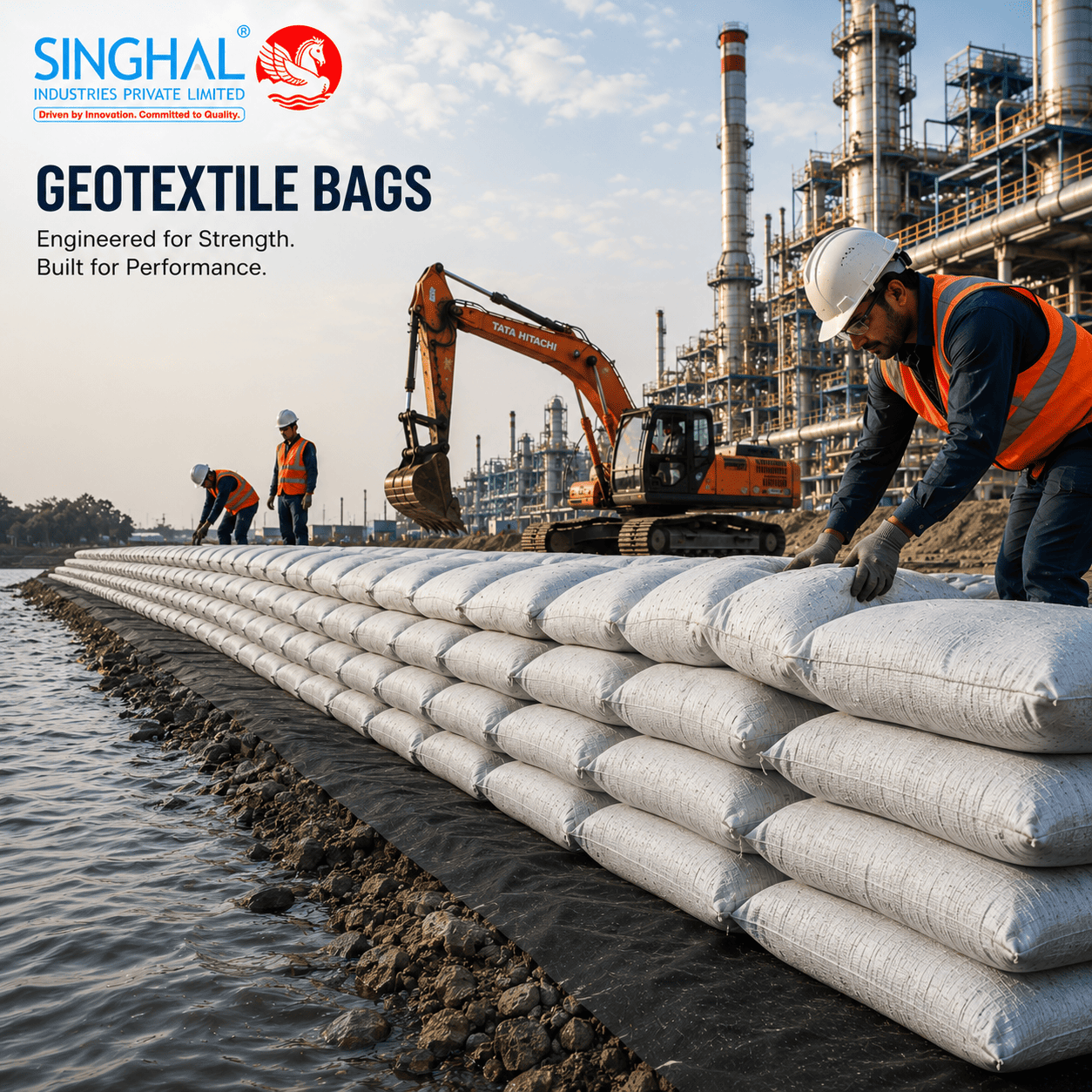
Geotextile Bags are containers that consist of geotextile fabric, which is woven or non-woven, and filled with soil or sand. They are applied where erosion control and sediment control, slope protection and hydraulic stability is desired. But not just by large stone or concrete structures.
SLA bags come in standard and custom sizes and have many applications for EPC companies, irrigation departments, marine contractors, road contractors, flood management agencies and buyers of infrastructure who need functional and affordable protection solutions.
Geotextile Bags (Geo Bags, Geo Textile Bags, Geotextile Sand Containers or Sand Bags) are permeable fabric bags constructed from geotextile material. They are completely filled with sand, soil or appropriate site material and set up into the required formations for erosion and protection purposes.
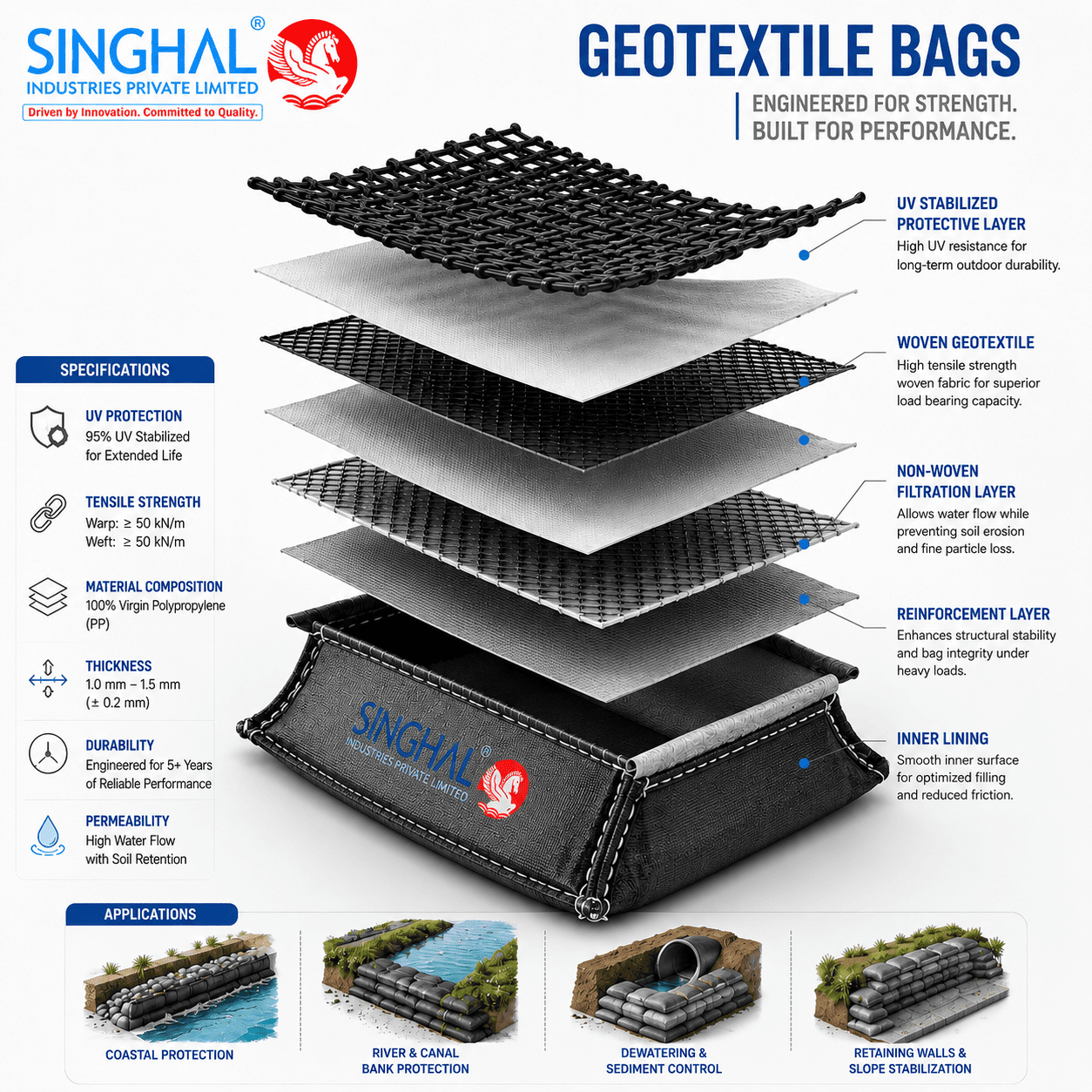
These types of bags are made from woven or non-woven geotextile fabric that can be made using polypropylene or other kinds of synthetic polymers. The water will be able to flow through these bags because of the permeability of these bags.
Geotextile Bags are sandbags which are used in geotechnical applications. They are more resistant, filtering, separating, and erosion resisting, and they are used in riverbanks/coastal, flood barrier, embankment, and drainage works.
Woven Geotextile Bags
Fabricated from geotextile fabric These bags provide good durability and are ideal for embankment work, erosion control work as well as hydraulic applications.
Non-Woven Geotextile Bags
Useful where filtration, drainage as well as soil retention, are crucial especially in geotechnical or environmental protection work.
Sand-Filled Geo Bags
It is filled with soil or sand and used to control floods as well as protecting the riverbank, temporary barrier as well as slope stability.
Marine Protection Geo Bags
The design is intended for shoreline protection, beach preservation, coastal structures and for controlling erosion at the shoreline.
Custom Geotextile Bags
Made to order according to the requirements of the buyer for GSM size, dimensions of stitching, fabric type filling capacity, as well as project-specific requirements.
Geotextile Bags are available in various options of standard and custom configurations:
Custom GSM dimensions, dimensions, stitching format as well as loading capacity and the type of fabric can be provided depending on the flow of water as well as soil condition and exposure level as well as the design of the project.
The company, Singhal Industries Private Limited, Geotextile Bags are made with an eye on the strength of the fabric and quality, stitching as well as dimensional accuracy and the efficiency of the site.
Step 1: Raw Material Selection
The appropriate polypropylene or geotextile material is chosen based upon the strength GSM, permeability and the project's requirements.
Step 2: Fabric Formation
Geotextile fabric that is non-woven or woven is produced by using yarns or other suitable processes for forming fabric.
Step 3: Cutting & Sizing
Fabric is then cut to the necessary bag dimensions according to the standard size or special requirements.
Step 4: Stitching Process
Bags are stitched to the necessary sides, with the mouth left open to fill with soil or sand.
Step 5: Finishing & Inspection
The bags that have been made are tested for stitching quality, size, quality of fabric, GSM, and handling quality.
Step 6: Packing & Dispatch
Geo Bags are safely packed to ensure a large supply of supplies and are then delivered to construction sites.
Singhal Industries Private Limited is a dependable Geotextile bags manufacturer, Geo Textile Bags Supplier as well as a Geo Bags Exporter providing high-quality geosynthetic bags for marine, infrastructure flood control, erosion control projects.
Our strengths are:
We are focused on providing dependable Geotextile Bags that are suitable for construction companies, EPC firms, maritime projects as well as flood control work as well as industrial purchasers.
Geotextile Bags are utilized to control erosion as well as the protection of rivers, flood stabilization beach protection, drainage and embankment construction.
They are typically made of geotextiles made of polypropylene, either woven or non-woven fabric.
They're comparable in use, but Geotextile Bags are designed to be used in geotechnical and erosion control applications.
Geo Bags typically contain soil, sand or other suitable material for the site according to the design of the project.
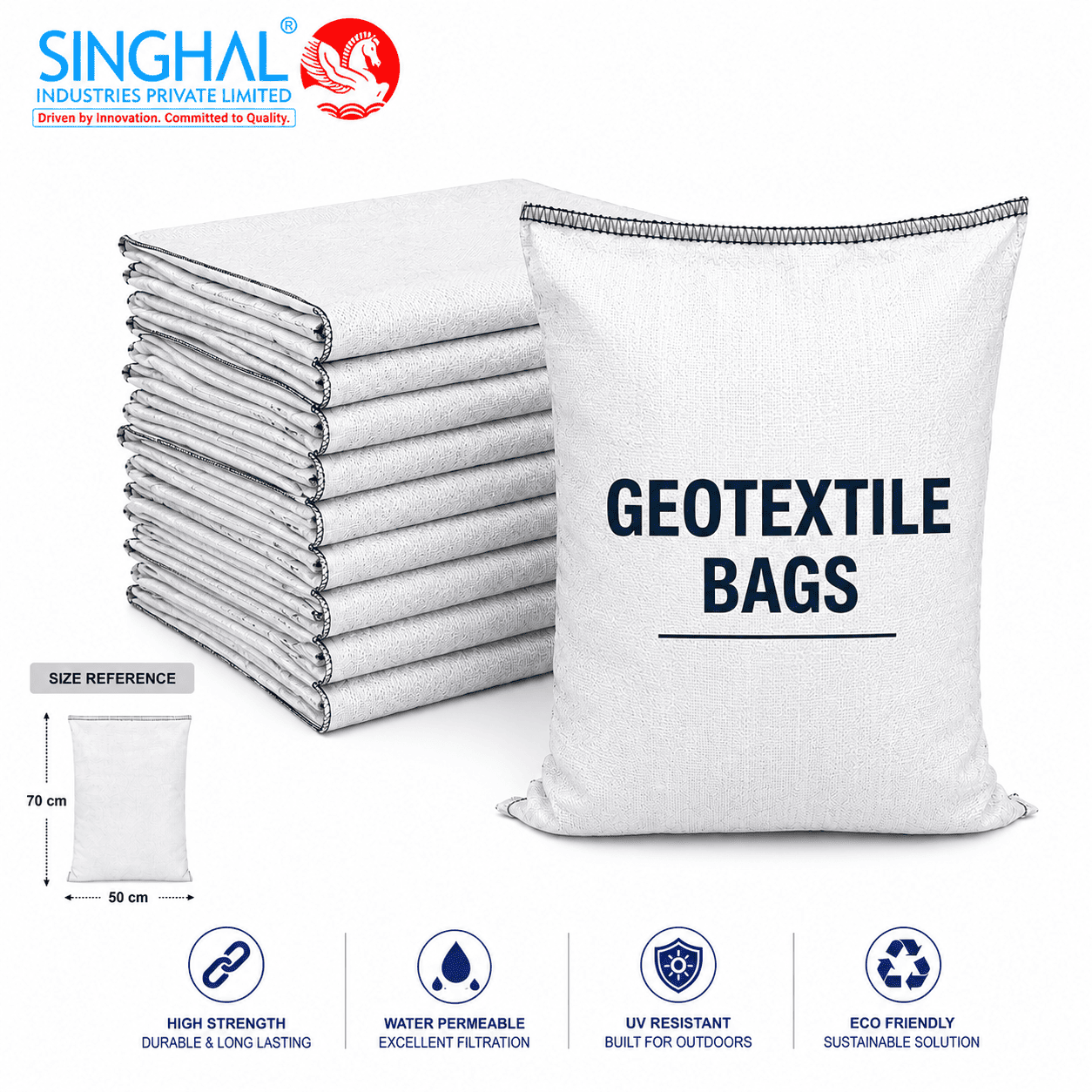
The most common sizes are 1.0 0.69 x 0.69 meters, and 1.0 to 0.7 meters.
Geotextile Bags can be purchased in grades that range from 100 GSM to 1200 GSM according to the application.
The load capacity listed is 200 kg and higher depending on the size of the bag and the material's grade.
Yes, the size, GSM, fabric type, the stitching method, and capacity for loading can be altered.
Geotextile Bags are containers that have been filled with Geotextile Bags are filled containers, while Geotextile Fabric is available in sheets or rolls to aid in separation of filtration, drainage and separation.
Geotextile Bags have permeable erosion systems Geotextile Bags are permeable erosion control units, while Geomembrane can be described as an inert liner that can be used for containment.
Yes, they are employed for barriers to floods, protection for temporary periods and water diversion work.
Yes, they're suitable for protection of shorelines as well as beach preservation and for support of marine embankments.
The Geo Bags can be made with UV resistance depending upon the grade of the fabric.
EPC contractors, companies as well as marine engineers, irrigation departments, road agencies, and infrastructure buyers utilize Geotextile Bags.
The selection is based on the type of project exposure to water, GSM bag size, bag material for filling, load requirements and installation requirements.
| Site Condition | Performance Level |
| Erosion Control | Excellent |
| Flood Protection | Excellent |
| Beach Protection | Good |
| Riverbank Stabilization | Excellent |
| Drainage Support | Good |
| UV Exposure Resistance | Good |
| Installation Handling | Excellent |
| Property | Geotextile Bags | Geotextile Fabric |
| Product Form | Stitched bag/container | Sheet or roll fabric |
| Main Use | Filled structure of protection | Separation, filtration, drainage, stabilization |
| Filling Required | Yes, it is filled with soil or sand | There is no need to fill out |
| Best For | Flood barriers, riverbanks, shorelines | Road work, drainage embankments and drainage, embankments, |
| Installation | As filled units | Laid as a continuous sheet |
| Strength Role | Fabric and mass containment | Fabric-layer performance |
| Buyer Need | Erosion control structure | Soil improvement layer |
Geotextile Bags are chosen for protection systems that are filled if needed. Geotextile Fabric is chosen when a project requires drainage, separation, filtration or stabilization using an underlying layer.
| Property | Geotextile Bags | Geomembrane |
| Main Function | Control of erosion and protection | Waterproofing and encapsulation |
| Structure | Bags of permeable fabric that are filled with air. | Liner sheet impermeable to water |
| Water Movement | Controlled control of | Blocks cause seepage |
| Common Use | Flood control, riverbanks, beach protection | Reservoirs, landfills, ponds containment areas, ponds |
| Installation Style | Layers of food are filled and then placed on top | Laid and sealed, welded or laid |
| Best For | Protection against erosion and hydraulics | Liquid containment |
| Buyer Need | Physical barrier for protection | Barrier to prevent leakage |
Geotextile Bags are ideal for erosion protection using soil as well as flood protection. Geomembrane is the best choice for projects that require a lining that is waterproof.
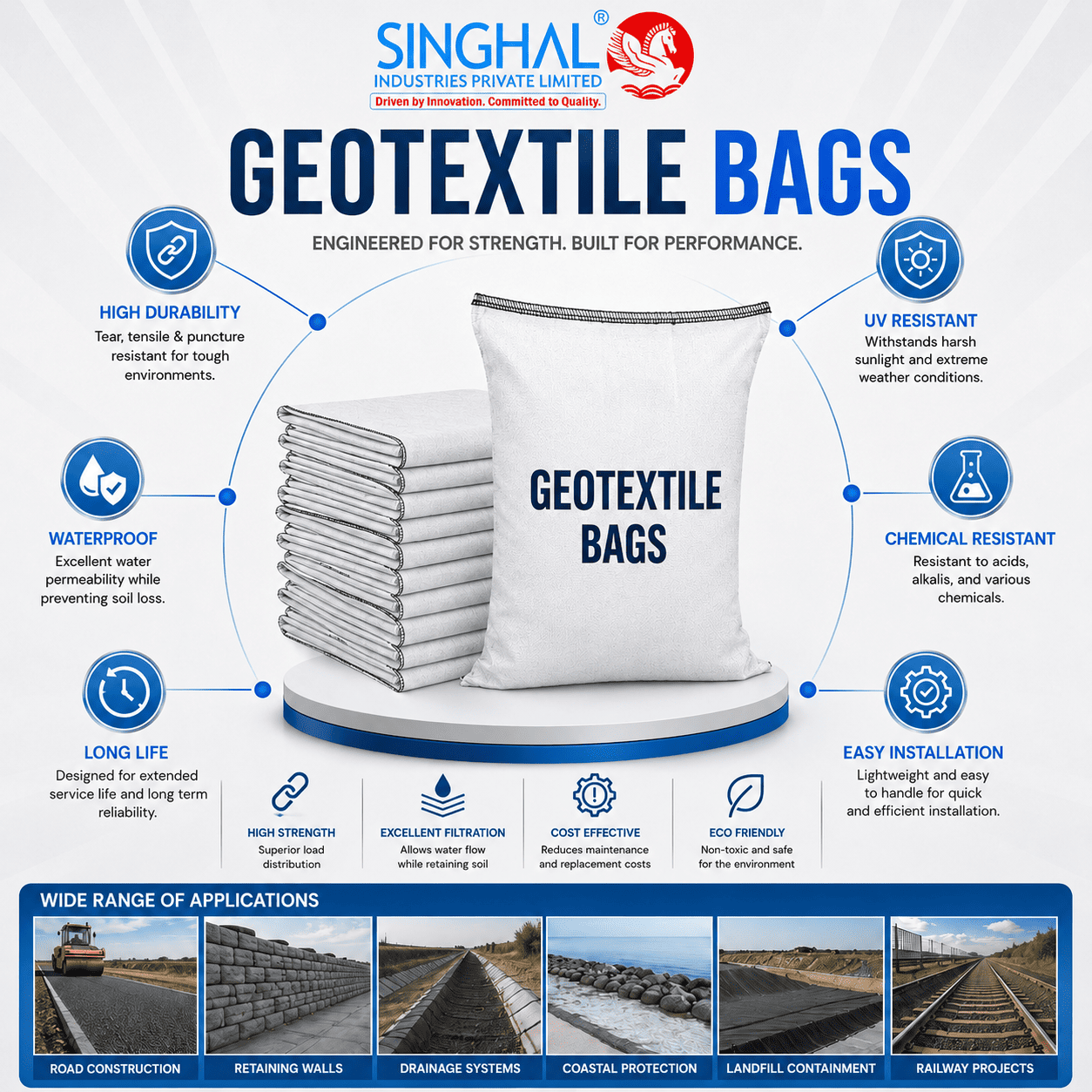
Beach Protection
Protects beaches and coastlines from erosion in areas where traditional rocks or boulders may not be feasible or accessible.
Flood Protection
As flood barriers, they are designed to redirect or limit the flow of water during flood-prone situations and for emergency protection work.
Riverbank Stabilization
It is used along canal banks and in waterfront areas to stop erosion of the soil and ensure the safety of embankments.
Marine & Offshore Structures
Perfect for shoreline reinforcements for marine embankments, shoreline construction, and works on coastal engineering.
Drainage Systems
They are used for dams, pavements, constructions, buildings, and groundwater control systems that require the filtration of water and stable drainage are needed.
Railway & Infrastructure Projects
Useful to stabilize slopes and Ballast safety, embankment supports, and for enhancing the subgrade's fragility.
| Property | Specification |
| Product | Geotextile Bags / Geo Bags |
| Material | PP/Geotextile woven non-woven fabric |
| Fabric Grade | 100 GSM to 1200 GSM |
| Standard Size | 1.0 0.69 x 0.69 meter 1.0 0.69 x 0.7 meters |
| Customized Size | As per the requirement |
| Loading Capacity | 200 kg plus |
| Life Cycle | Between 4-5 years, dependent on the site's conditions |
| Packaging Type | Supply of roll / bundled in accordance with the type of product |
| Application | Beach protection, flood protection, erosion control |
| MOQ | 500 pieces, as per the list. |
| Customization | Dimension, GSM type of fabric and the project's requirements |
| Application | Recommended Geo Bag Type |
| Beach Protection | Heavy-duty Geotextile Bags |
| Flood Control | Sand-filled Geo Bags |
| Riverbank Protection | Woven Geo Textile Bags |
| Drainage Work | Permeable Geo Bags |
| Railway Embankment | High-strength Geo Bags |
| Marine Structure | UV-resistant Geo Bags |
| Custom Project | Project-specific Geo Bags |


